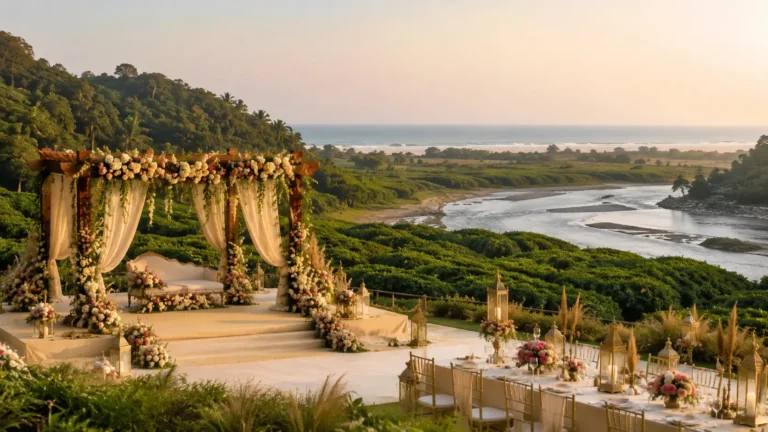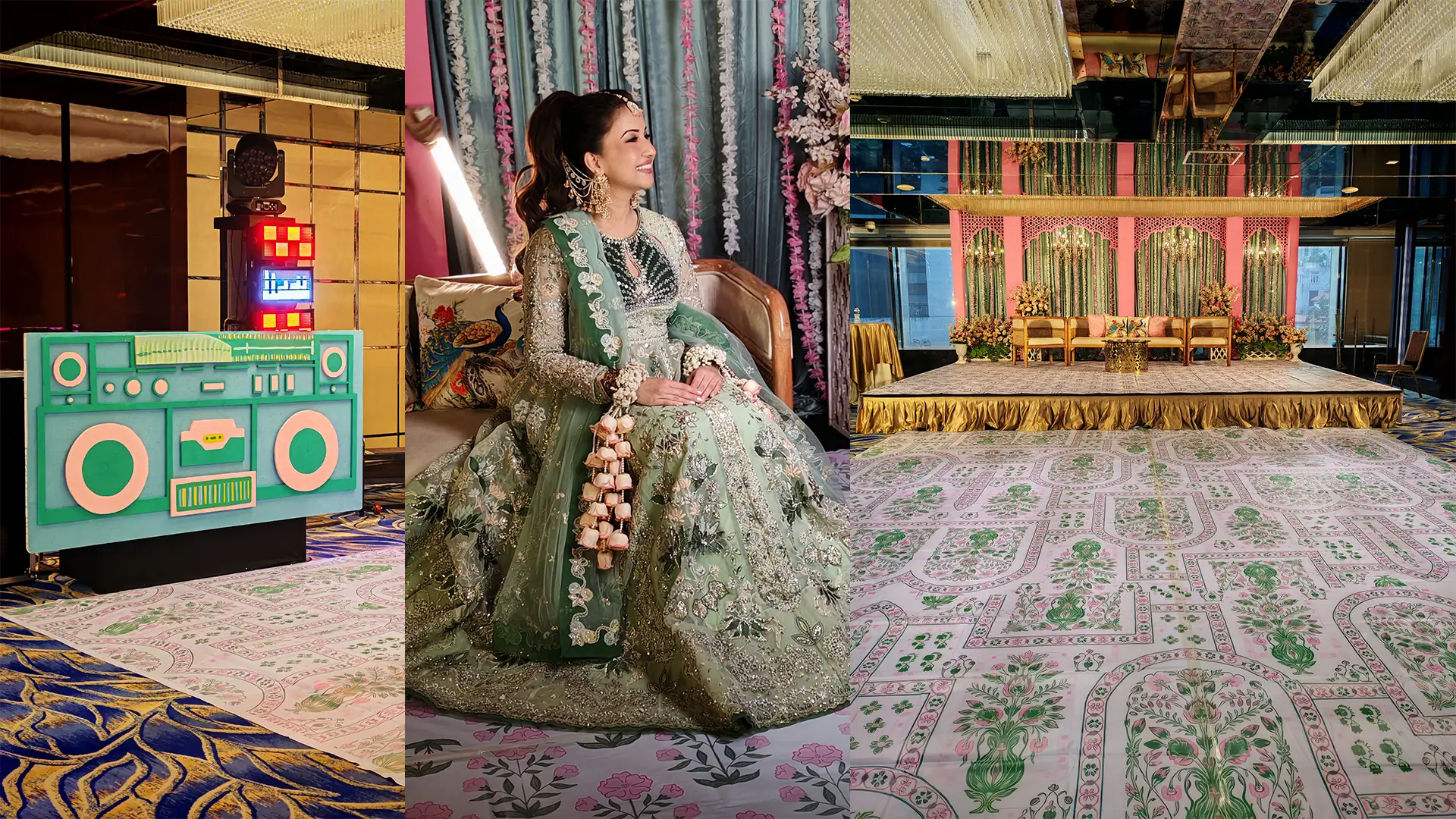
Is Sangeet Ceremony Replacing Gaye Holud or Mehendi in Bangladeshi Weddings?

A question keeps coming up in planning meetings across Dhaka, Bangladesh: should couples include a Sangeet ceremony in a modern Bangladeshi wedding, or are Gaye Holud and Mehendi already enough?
It is a fair question. Five years ago, Sangeet ceremonies were rare at Bangladeshi weddings, except among a handful of Sylheti or Bollywood-inspired families. Today, they appear at some of the most talked-about celebrations in the city, from intimate rooftop evenings in Gulshan/Banani to multi-day events at resort venues near Dhaka. At Look N Feel – Event Solutions, we have seen a noticeable rise in couples requesting Sangeet-focused wedding weekends, especially among NRB families and younger Dhaka couples looking for more guest interaction and entertainment-led experiences.
But a more difficult conversation has started beneath the surface. Some couples are not asking whether to add Sangeet. They are asking whether to replace Gaye Holud or Mehendi with it entirely. Budget pressure, scheduling fatigue, and the fear of over-planning are leading more families to cut one or two ceremonies and put everything into a single large pre-wedding event.
This is worth examining honestly, because what a couple gains in simplicity, they often lose in ways they do not anticipate until the wedding is over.
What Sangeet Actually Offers
The word sangeet means music, and its traditional form was a women’s gathering where songs were sung for the couple in the days before the wedding. That intimate version still exists in many families.
What has emerged in contemporary Bangladeshi weddings is something larger: a hosted evening of performances, family dances, live music or DJ sets, and often a theatrical couple entry. The atmosphere is designed to be energetic and social, closer to a gala than a ritual.
A well-produced Sangeet is planned almost like a show, with a running order, lighting design, and guest participation built in. Families rehearse. The event has a narrative arc. This is why it feels so different from anything Bangladeshi wedding culture has traditionally included, and why it is drawing significant interest among younger couples in Dhaka.
That energy is genuinely valuable. But it is one kind of value, and it is not interchangeable with what the other ceremonies provide.
Why Replacing Gaye Holud Is a Mistake
Gaye Holud sits at the emotional centre of a Bangladeshi wedding, and no amount of production value changes that.
The ceremony carries meaning that cannot be replicated through entertainment. The application of turmeric is a blessing ritual. The presence of family elders, the traditional music, the yellow florals, the exchange of trays between families: these are not aesthetic choices. They are part of what makes Gaye Holud one of the most emotionally significant pre-wedding events in Bangladesh. They are cultural language that connects the couple to their family history and, for many guests, to their own memories of weddings past.
When couples skip Gaye Holud to save time or budget, the feedback is almost always the same in hindsight. Older relatives feel the absence acutely. The wedding feels lighter than expected. Something that cannot quite be named is missing from the photographs.
There is also a social dimension that is easy to overlook during planning. Gaye Holud is often the event that brings extended family together across generational lines. A Sangeet tends to draw a younger, more entertainment-oriented crowd. If you remove Gaye Holud, you may be removing the one event where your grandmother, your parents’ colleagues, and your childhood neighbours all feel genuinely included. That is a real cost, not just a sentimental one.
What You Actually Lose Without Mehendi
Mehendi is softer in tone than both Gaye Holud and Sangeet, and that softness is precisely its value.
It creates a space for the bride and her close circle to slow down in the days before the wedding. The henna application is unhurried. The gathering is usually smaller and more personal. The aesthetic, built around florals, textiles, and artistry, photographs beautifully and produces some of the most intimate images of the entire wedding.
For couples who are considering merging Mehendi and Sangeet into one evening: this can work, but it requires careful design. The two events pull in opposite directions emotionally. In many luxury weddings in Dhaka, planners now separate Mehendi and Sangeet by at least several hours, or place them on different days entirely, to preserve the atmosphere each event is meant to create. Sangeet wants energy and momentum. Mehendi wants ease and warmth. Rushed Mehendi application in the middle of a Sangeet setup, or a Sangeet that starts before the henna has dried, creates an experience that satisfies neither purpose fully.
If budget is the reason for cutting Mehendi, it is worth knowing that a well-designed Mehendi gathering does not require the same production investment as a Sangeet. It is a different kind of event, and scaling it appropriately is entirely possible without compromising what makes it meaningful.
The Honest Case for Keeping All Three
Couples who hold Gaye Holud, Mehendi, and Sangeet are not being excessive. They are recognising that their guests are not a single audience.
Grandparents who cherish the Gaye Holud rituals. Cousins who will talk about the Sangeet performances for years. Close friends who treasure the intimacy of a Mehendi gathering. These are the same family, but they connect through different kinds of celebration.
Each ceremony also gives the couple something distinct. Gaye Holud is about receiving blessing. Mehendi is about being present, unhurried, celebrated quietly. Sangeet is about collective joy, performance, and the sense that something significant is beginning. Collapsing all of that into one event produces something that tries to do everything and often does none of it fully.
The couples who regret their wedding calendar are rarely the ones who planned too many events. They are almost always the ones who cut corners under pressure and then wished they had not.
Questions Worth Asking Before You Decide
Before adjusting your wedding calendar, a few practical questions clarify the decision.
Do your families enjoy performance-based events, or are they more comfortable with ritual-centred celebrations? A Sangeet imposed on a family that finds it unfamiliar can create awkwardness that carries into the wedding day.
Which guests will feel most included at which event? If your extended family and older relatives make up a significant part of your guest list, cutting Gaye Holud removes the event most designed for them.
Is budget the real constraint, or is it scheduling? These require different solutions. A scaled-down version of all three ceremonies often costs less than a single over-produced Sangeet, while preserving the emotional range that makes a wedding feel complete.
Are you making the decision based on what you genuinely want, or on what looks compelling on social media? Sangeet produces extraordinary content. For many Bangladeshi families, however, Sangeet works best when it complements existing traditions rather than replacing them entirely.
Frequently Asked Questions About Sangeet, Gaye Holud, and Mehendi
Planning a modern Bangladeshi wedding often means balancing tradition, guest experience, budget, and personal style. These are some of the most common questions couples ask when deciding between Sangeet, Gaye Holud, and Mehendi celebrations.
Final Thought
Sangeet is a genuine addition to modern Bangladeshi weddings. It brings energy and entertainment that the other ceremonies do not offer, and when it is well-designed, it becomes one of the most memorable events of the entire celebration.
But it is not a substitute for what Gaye Holud carries, or for the quiet beauty that a Mehendi creates. Couples who are weighing these decisions deserve content that tells them this clearly, not content that makes every ceremony sound optional.
The best wedding calendar is the one that reflects who you are, who your guests are, and what you actually want to remember. For most couples in Bangladesh, that still means all three.
Look N Feel – Event Solutions designs Gaye Holud, Mehendi, and Sangeet ceremonies across Dhaka and destination venues throughout Bangladesh. If you are trying to balance tradition, modern celebration, guest experience, and budget within your wedding calendar, our team can help you structure each event in a way that feels intentional, personal, and emotionally memorable.